
May 2026 Blog-Story Structure Made Simple
- arworth
- May 7
- 5 min read
Welcome to my monthly blog! Each month I like to discuss the world of writing through my lens and what brought me to become a writer and published Author but mostly to share ideas and exchange ways to help the youngsters in your life learn to become better writers. I hope your May is going wonderful so far! (Mother's Day is May 10th)

This month, I focus on Story Structure in writing, education and in parenting, focus on completing what they start without forcing perfection. One of the things I enjoy from my childhood writing was learning about Poems and how different styles have different effects in their meaning. A type of Poem that comes to mind is The Limerick (May 12th is National Limerick Day) For those who don't know or remember, a limerick is a five line rhyming Poem set to a particular structure; the first, second and fifth lines rhyme and have a longer "beat," while lines three and four and shorter but also rhyme, creating the pattern AABBA.
Here is limerick I made just for fun and for an example:
There was an old fellow named Sam A
His lunch was Grilled Cheese and Ham A
He ate it on Rye B
Then he asked for some Pie B
And gave it to his lady named Pam A
So as silly as this featured limerick is, you notice the beginning, middle, and end follows a pattern. This is the subject of this month's blog. Let's Dive In...
I- Writing- Beginning, Middle and End without the pressure and breaking story structure into child- friendly concepts.
Understanding the framework in Story Structure can be as simple as thinking about a sandwich, the story sandwich, that is, and making it follow the three part structure. The beginning or set up can be the top bun, where the character is first introduced and something happens building the conflict which is the middle or the "filling." Problems arise and actions are taken to solve conflict. The resolution or the End is the bottom bun, where the character solves the problem (climax) and all is normal.
When children learn to use this framework, they are organizing thoughts bit by bit, carefully creating the character, setting, plot and solution. The following is an example illustration showing this method for planning purposes:
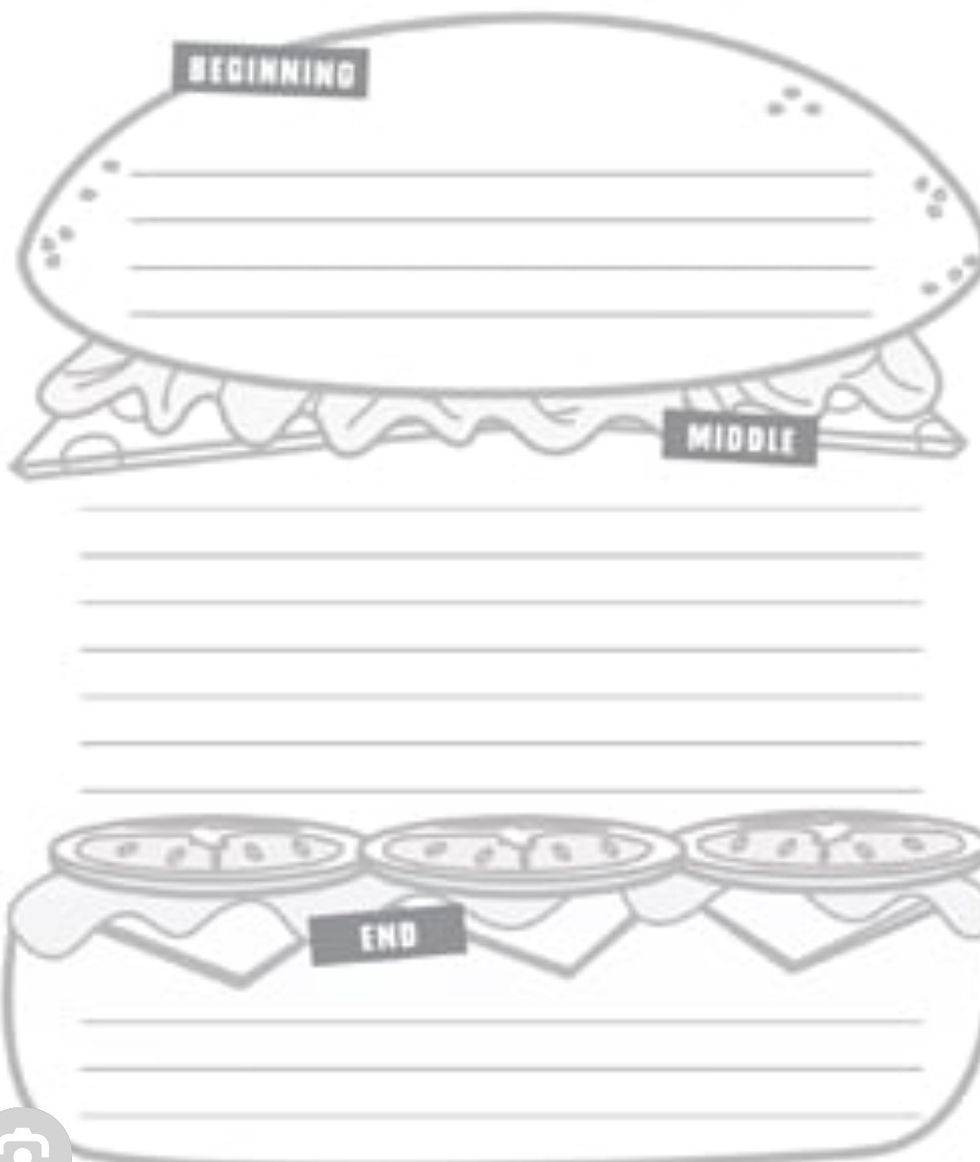
Helping to visualize the story using this image will be a game changer in many writing assignments. The struggle to put together a story that has all the elements it needs to be grammatically and effectively influencial to readers must include these concepts. Once your youngster understands building a "sandwich" to tell as story will help ease the pressure, it will be used over and over.
Another way to look at non-pressure methods for developing beginning, middle, and end in stories is to think about a mountain. You begin at the bottom, as you climb up to get over the mountain, the problem(s) start and peak as you reach the top, then as you come down the other side, the resolution is the ending.
See Illustration below:

This diagram makes it easy for students to follow writing a story with structure and purpose. Having the format laid out in this way gives students independence in being creative by filling in the blank squares and using proper sentence structure to complete the story.
II - Education - Why Structure Helps Creative Freedom. How gentle structure supports confidence rather than limits imagination.
Students need structure to help prevent fatigue in both learning and decision making. When I was a student teacher, we were taught that when we "scaffold" our lessons to help students explore and create independently, it prevents a burn out or loss of energy for focusing on the task. We thrive on structure because it is essential in creating action, and clear problem-solving abilities.
Structure produces a starting point which makes clear beginnings to build upon. It encourages one to work within the boundaries without over thinking and losing interest. The scaffolding effect becomes a steady dose of independent work, creativity and helps students gain confidence in developing a consistent habit. Students who utilize a structured and organized routine, gain more understanding with this habit. This structured freedom will become part of their whole educational goals, not just in classroom work but creating effective goals that become part of their everyday life.
In the scaffolding routine, planning, decision-making, time constraints, and thinking both in and outside of abstract thoughts become a framework for success. In addition to the independence gained, this structure engages students in project-based learning enabling them to come up with complex problems and original solutions which encourages their critical thinking. The teacher acts as a facilitator or mentor and allows students to develop in the community and produce creative and authentic work.
III- Parenting- Helping Kids Finish What They Start. Supporting strategies without forcing perfection.
There is not a parent alive, in my opinion, who hasn't struggled with this topic at least once in their child's life. The key to accomplishing this concept is to break it down into smaller tasks, whether it's finishing homework, cleaning their rooms or working on a project for school. Many children are challenged by the attentional issues and distractions from environmental and internal difficulties, making completion a real challenge.
The use of visual aids such as charts, check lists, timers all help this process but, as hard as it may be for us parents and grandparents to comply, the end result should focus on efforf, not necessarily completion in certain circumstances.
Children who are always up against finding perfection often miss the in-between steps of achieving the finish line. Setting limits to how long they are required to work at the task will give them a sense of connection and make it easier for them to process the task to begin with.
Motivation can help prepare them for their tasks as well. The energy they use in completing tasks will be remembered for future tasks, so following a manageable step by step routine, setting goals and encouraging breaks will all make the process much easier to get through.
Preparing children for the day they will be in the work force, regardless of what path they choose, establishing the correct method and understanding the growth that comes from each successful result, is the key to supporting task initiation.
Kids learn from modeling behaviors so using a certain method to begin a task across the different life goals is helpful too. Making a grocery listy with your child before leaving home so you only buy what is on the list, using a calendar to schedule important dates, whether it is using a paper method or computer, phone, watch, etc., keeping a daily to-do list puts it in writing to hang on the fridge or mirror so it is seen. These strategies can increase your child's ability to engage in whatever tasks they have as independently as possible. The "scaffolding" here builds so that the tasks are self-guided and can be referred to visually.
This month's family activity is to build a story together one sentence at at a time so everyone has a chance to create the outcome.

Feel free to drop a comment or share a story you have written with your kids! Next month, I'll be writing and discussing Memory and Meaning and how using everyday memories is inspirational in story writing and the importance of writing about past experiences.
THAT'S ALL! HAPPY MOTHER'S DAY!


Comments