
Anita Bringe-Worth February 2026 Blog
EMPATHY AND UNDERSTANDING
February came in like a blast! I certainly did not expect to see a foot of snow this past weekend after being cooped up all week following an ice storm that made its way through North and South Carolina, on top of fighting off a respiratory bug, but that's life, right? I am grateful that I had the warmth of my home to comfort me, plenty of food, water and (necessary medications) plus the love and companionship of my three fur babies to keep me company throughout the storms. Thankful the power stayed on but heartily sorry for those who had to make other choices to stay safe and warm.
WELCOME to a new month here on my blog where I write about the things that hold special meaning and purpose in my life and to share with anyone who is looking for some support along the way to their writing journey.
*Some important dates to mention this month are:
Feb. 14th VALENTINE'S DAY, Feb. 20th WORLD DAY OF SOCIAL JUSTICE
INTERNATIONAL FRIENDSHIP MONTH
In this month's blog, I am focusing on the topic of how empathy and understanding has a place in what we read, think and do and how we can make an impact in our writing, education and parenting choices.
I. In this segment, I will discuss "Writing characters who see the world differently" and how stories can introduce perspective-taking and empathy through character choices.
When writing a story that emphasizes characters who are empathtetic, what we do is to "SHOW" not tell how the character is able to connect with another person's emotions and experiences in order to provide a true connection and reach beyond the surface in relationships between two or more people. Writing a character with empathy and understanding can be as simple as describing the physical sensations that show how the character is reacting to an emotion such as their trembling hands for being afraid or describing a chest rapidly moving up and down for heavy breathing to show being afraid or feel the tension between an argument or disagreement.
In my book, "My Baby and Me," I was able to show empathy without using those particular physical descriptions; contrary, I was able to draw the reader to "see" that when the baby doll was lost and then found at the ice cream shop, the server behind the counter who found the doll, expressed empathy to the little girl by commenting on the way the doll looked so loved, torn and tattered, thereby connecting how much the girl loved her doll by the physical appearance. Simple gestures and expressions do not need big dialogue.
Character development in stories with empathy need to show they can listen to their counterparts and validate their feelings, be supportive and avoid judgement. The Harry Potter books come to mind when I think about empathy in literature. Harry is a key character who is highly empathetic as his compassion for understanding his "enemies" helps in his determination to overcome his struggles and trauma, and uses that as his strength to fight for loyalty and friendship.
Attached below find two printable worksheets to understand how empathy finds its way in character development. "Walk in Their Shoes"
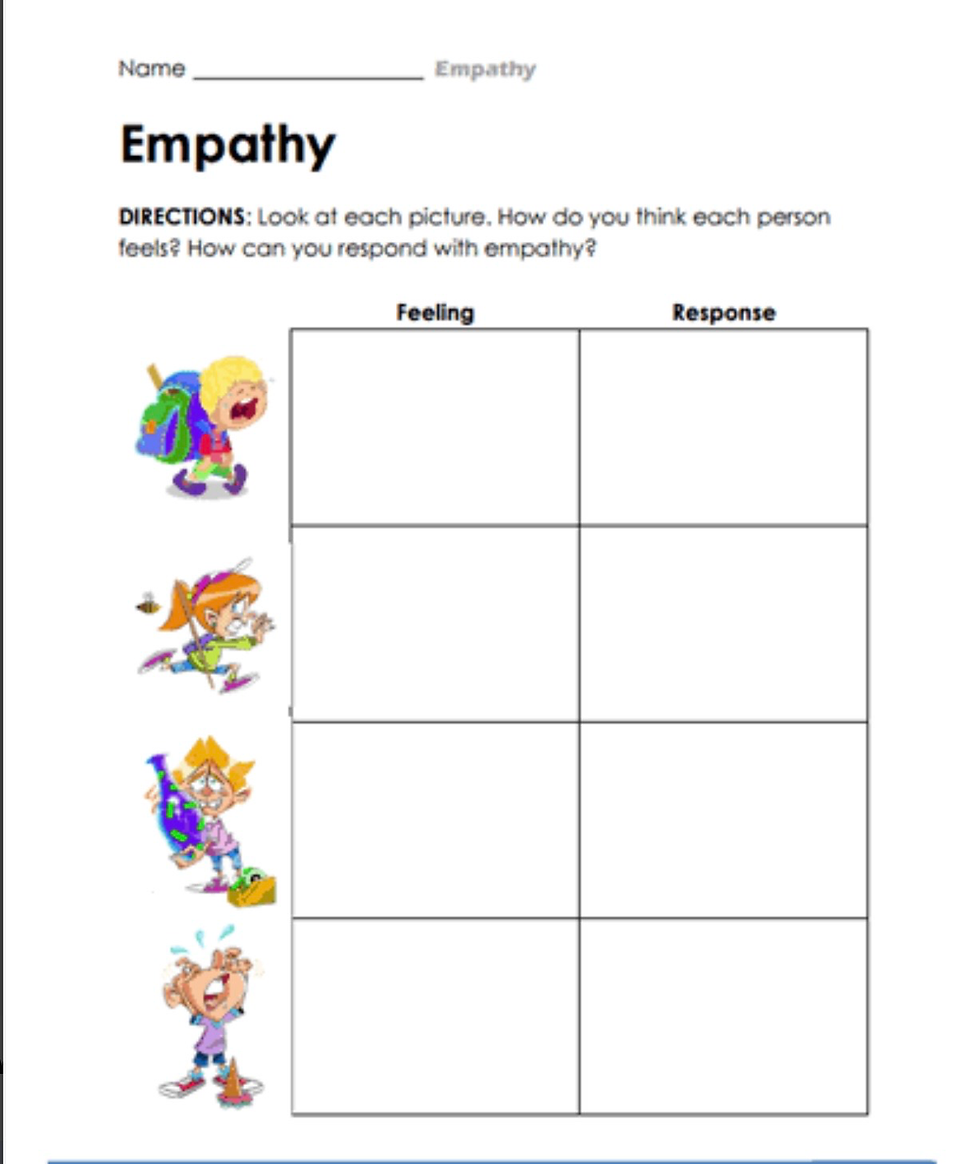
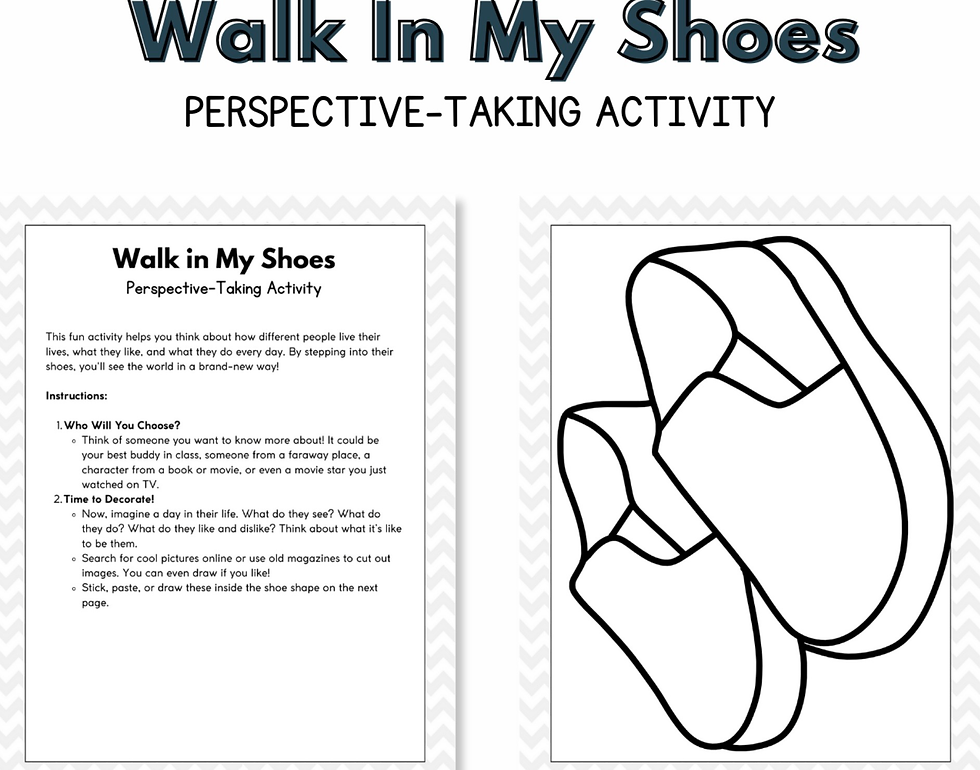
II. The education section will focus on "Using Books to Talk About Differences; the Importance of Guidance on Age-Appropriate Discussions around Difference and Inclusion."
In keeping with the Empathy and Understanding theme, there comes a moment in discussions with children where using literature to assist in having mature and age-appropriate discussions regarding understanding diversity, inclusion, acceptance and individuality becomes key. This topic offers a wide range of possible discussions to help young children, as well as older kids, feel the comfort level of making connections to their own emotions as they navigate the uniqueness of other people's presence.
Discussing empathy, kindness, and acceptance can be done using recommended books by age group. Explaining that some children do not share your child's background in family, or finances, physical looks, etc, can be done with the book, "It's okay to be different," by Todd Parr. A simple, yet colorful way to directly talk about how to accept others' differences. Using the right book can empower a child to not only hear the words but come to know then understand the illustrations which provide simple emotions and connections. This brings me to share my school experience. Growing up in New York, the school district I was in had a program which encompassed students that did not "fit" the typical educational guidelines for inclusion. These students were placed in self-contained classroom with one teacher, one aide and six students, making it a 6:1:1 class. It was known as the CRMD (Children with Retarded Mental Development).
This was in the mid to late 1960's. Some of these students appeared older than the typical elementary aged students in grades one through five and many were behavioral (throwing things, spitting, hitting, etc) which was a regular part of their routine class. Their educational piece was mostly learning life skills such as, interacting with classmates, cooking, crafts, etc.
When I first heard of these classes, I learned that the program in the district was renting school room space because there was no room for them in any other academic environment in the borough of Queens where I lived.
For several years, I would see the students in the gym or lunch room at an isolated table with their aides tending to the needs of those acting out or needing support to perform certain tasks in class such as OT or PT movement exercises or in art helping them with hand over hand motions due to the students' weak muscle tone. When walking in the hallway going from one special to another, we saw them down the hall and in their own classrooms seemingly happy and enjoying whatever activity was going on at the time. These classes joined the rest of the school in the auditorium for assemblies each week and sat in their designated section.
After several years of sharing school space, it was time for some of these students to move on to group homes or other facilities due to aging out of the system. I never gave it much thought as a child because I did not have interaction with them on most occassions but we were taught to be respectful and compassionate of their differences and needs and above all to be kind and show empathy. Having lived through the experience of this educational model was perhaps a big factor in my decision to become a special education teacher after I had my own children.
Living through the authentic days of not only seeing the differences in the CRMD students, but hearing the sometimes difficult screams and howls of those diagnosed with Tourette's in addition to their disability, was both heart breaking and challenging.
Today's educational opportunities are very different for those with disabilities and fortunately better training and acceptance makes it easier to include them in more typical settings as much as possible. Each disability has its own set of criteria to allow those with these challenges to be placed accordingly. It is important for teachers and parents to show how acceptance and inclusion, if appropriate, can enlighten any child's educational experience by normalizing through discussion, rather than ignoring them creating an empathetic attitude for those who are, in fact, different.
Some resources to guide you in understanding diverse abilities:
"Uniquely Wired," A story about Autism and its gifts
"I see things differently," A first look at Autism
"Meet Clarabelle Blue"
To encourage empathy, understanding and friendship:
"Skin like mine"
"All Because You Matter"
"Tully and Me"
III. Parenting - "Teaching Kind Boundaries, not just kindness" Helping children understand empathy alongside self-respect.
When I think of teaching boundaries and kindness, I am reminded of the very funny episode of "Seinfeld" where the Elaine character, played by Julia Louis Dreyfuss, dates a guy, Aaron, who is very sweet but happens to be a "close talker." By close talker, I mean a person who is right in front of your face with no room to breathe, literally! Every time he responded to Elaine in conversation, he was right there up in her face, almost nose to nose. He not only was a close talker but a very kind and generous person and extremely happy go lucky. It became problematic when he ingratiated himself into the group activity and did the same thing to others as he did to Elaine without realizing he was even doing it. No one knew how to deal with him because he was so nice and accommodating. Elaine did break it off because he was spending more time making others happy instead of being with her. This kind of boundary setting story was a comedy but all too often it depicts real life dilemmas.
It is important to remember when setting boundaries, they must be clear and firm but with kind intentions to protect your emotional well-being so everyone's needs are met. Using "I" statements when communicating needs and understand that saying "no" is not unkind, it's a form of self-respect.
Setting boundaries afre the tools for maintaining healthy relationships. If Elaine had told heer guy, Aaron, that he was standing too close and it made her uncomfortable, perhaps he would have been able to find a less invasive position to be in without being right in her face. Elaine could have said, "I understand you are excited when you tell me good news, but I feel you are too close to me when you talk in my face." Using " I feel" not "I think" puts more emphasis on an emotion which everyone is entitled to have and validates the moment.
Being consistent is another important principle when setting boundries. There is an acceptance level that we all have and being consistent also builds trust and shows understanding. A family activity that could help is to read a book together and discuss how each character might feel. Delving into the emotion and understanding of how relationships are strenghthened by honesty, caring, and empathy toward others helps to build the respect needed for everyone involved.
Here are some ideas to get started:
"Personal Space," by Michael Gordon
"I keep my hands to myself. I know my Boundaries,"- Suzanne T. Christian
"NO Means NO," by Jayneen Sanders
There are so many wonderful resources to help with teaching children to respect and be empathetic to others. Being a role model is the best way you can show them and keep conversations open so the trust is always there!
See ya next month for "Curiosity and Questions"
LOVE TO ALL AND HAPPY VALENTINE'S DAY!


Comments